

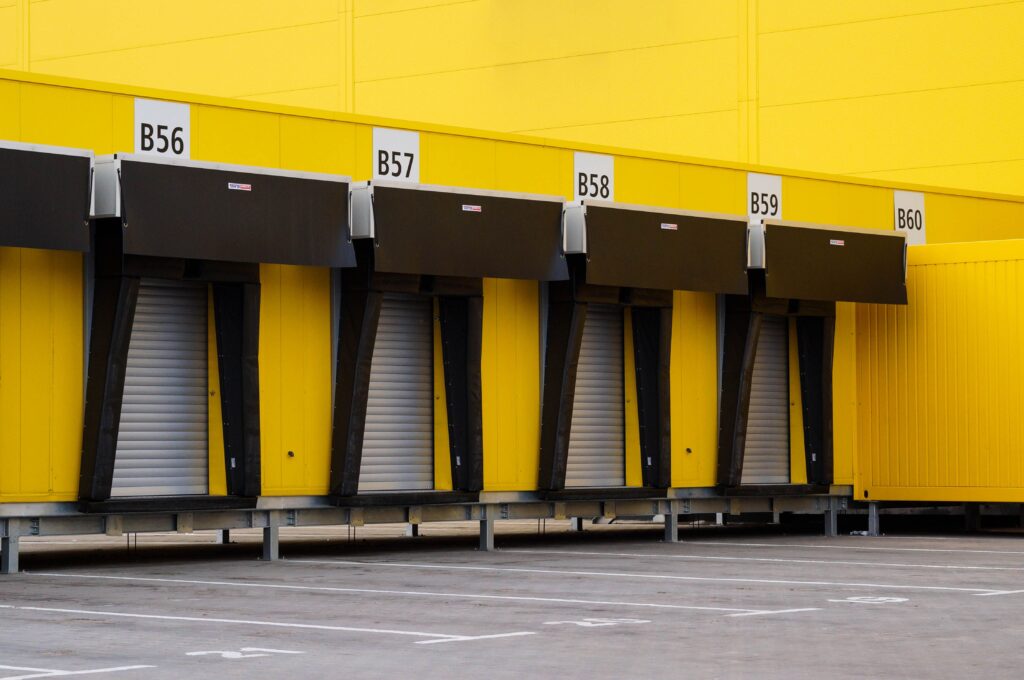
Some yard managers leave on time. Their yards aren’t smaller or slower, they’re better coordinated. This is how good labor and volume management in dock operations changes your yard.
Throughput is up. E-commerce keeps pushing more loads through the gate, carriers want faster turnarounds, and nobody wants to leave money at the curb. So warehouse and yard managers say yes to more volume.
On paper, the docks still handle it. What the numbers miss is that coordination gets harder much faster than volume grows – and behind every well-run shift is someone who built enough structure to stay ahead of it. That gap, between what your dock operations can physically move and what they can actually coordinate, is where labor and volume imbalances start. It’s also where the best yard managers quietly create an edge every day.
Why Dock Operations Become Overloaded
Overload usually creeps in through a handful of mismatches that pile up over a shift.
Labor vs. volume mismatch
The obvious imbalance often is cyclical. Peak seasons hit hard and fast: Black Friday volumes can surge 30–40% overnight, and the weeks before Christmas routinely push dock throughput to its absolute ceiling. The problem isn’t that operations don’t see it coming. It’s that the response is almost always the same: bring in more staff.
But temporary headcount only fixes a capacity problem, and capacity is rarely the actual bottleneck during a peak. More workers means more people to coordinate, more handoffs, and more chances for two crew members to act on outdated information. The yard gets busier without getting faster – and the managers who navigate peaks best aren’t the ones with the most people. They’re the ones with the clearest picture of what’s happening.
When processes don’t scale with volume
A whiteboard, a shared spreadsheet, and a few radio calls work fine at 80 trucks a day. At 200, the same setup turns into guesswork. Nobody has a current view of which doors are open, where a specific trailer sits, or which load runs next – the real-time yard visibility that turns reactive yards into coordinated ones.
That’s the core dock and yard coordination problem. Processes that don’t scale don’t fail at once, they just get slower and more manual until congestion becomes the default.
Urgency abuse: when everything is a priority
As pressure builds, every load somehow becomes urgent. Drivers push, planners escalate, and the sequencing logic that should govern dock scheduling falls apart. When everything is top priority, the loudest voice wins instead of the most important load – and genuinely time-critical shipments get buried.
The Operational Impact
These imbalances cost real money. As coordination breaks down, the effects stack up:
- Lost visibility: staff can’t say for sure where trailers, chassis, or equipment are, so time goes to searching instead of moving freight.
- Rising dwell times: trailers sit too long, pushing up detention and demurrage fees.
- Slower turnarounds: congested gates and contested docks stretch check-in and check-out, which frustrates carriers and puts future capacity at risk.
- More errors, more stress: under pressure, people misassign doors, miss departures, and burn out.
A yard with genuine transparency runs differently. Shifts end on time, handovers are clean. The manager who used to spend Friday afternoon untangling a trailer pile-up is out of the gate by five.
Practical Ways to Bring Structure to Dock Activity – and How to Get There
If the real shortfall is transparency, that’s where the fix starts. Five moves do most of the work:
- Centralize the picture. One source of truth for planner and yard manager alike – no whiteboards, no competing spreadsheets.
- Control arrivals at the gate. Gate scheduling and pre-registration flatten the peaks that overwhelm docks.
- Make assignment a rule, not an argument. Structured slot and dock assignment based on real priority ends the “everything’s urgent” tug-of-war.
- Track dwell time. You can’t cut detention and demurrage you can’t see.
- Use your own data. Historical KPIs turn the last bad shift into a decision – not just a memory.
Most operations know these levers exist. The gap is having a system that runs them together, in real time, without adding a coordination layer of its own. That’s what INFORM’s YMSlite is built to do – a single cloud-based platform that connects live yard visibility, gate scheduling, smart dock assignment, and dwell tracking in one place, sized for 3PL hubs, intermodal terminals, and warehouses that need practical warehouse yard management without enterprise cost.
When the system carries the coordination load, managers get back something worth more than efficiency: the headspace to lead instead of react. To make strategic calls instead of tactical ones. To build the kind of operation that grows on its own terms – and leaves room for everything outside of work that matters too.
Join the free webinar – with yard management expert Dawson Myers
In 30 minutes, you’ll see how to set up real-time yard visibility, cut dwell time, and run structured dock scheduling without overhauling your current operation. If congestion or carrier friction is costing you now, this is the session to watch.